
Exercise and Blood Glucose: What Heather’s Numbers Are Telling Us
Exercise and Blood Glucose: What Heather’s Numbers Are Telling Us
One of the most rewarding parts of working with clients managing Type 2 diabetes is watching the numbers move in real time. Heather has been logging her blood glucose before and after every session, and the pattern is exactly what we want to see, exercise doing measurable, immediate work.
The readings
Over a few weeks of sessions, Heather’s finger prick readings looked like this:
| Date | Before | After |
|---|---|---|
| 30 Jul | 7.1 | 5.2 |
| 1 Aug | 7.6 | 6.0 |
| 6 Aug | 5.1 | 5.0 |
| 8 Aug | 7.3 | 5.4 |
| 13 Aug | 6.5 | 5.2 |
| 15 Aug | 8.0 | 5.0 |
| 19 Aug | 7.1 | 5.2 |
| 20 Aug | 9.8 | 5.5 |
What stands out isn’t just that the numbers come down, it’s how consistently they land in a healthy post-exercise range regardless of where they start. Even on the 20th, when Heather’s pre-session reading was 9.8, a single session brought her back down to 5.5. That’s the kind of result that makes the case for exercise as part of daily diabetes management, not just a nice-to-have.
Why this happens
When you exercise, your muscles pull glucose out of the bloodstream to use as fuel, and they keep doing this for a while after you’ve finished, too. Resistance training in particular, which is a big part of Heather’s programme, helps build the muscle mass that improves insulin sensitivity over the longer term, which is exactly what matters for managing Type 2 diabetes day to day. So the benefit isn’t only the dip you see on the day, it’s a cumulative effect that makes the body better at regulating blood sugar over time.
In the studio
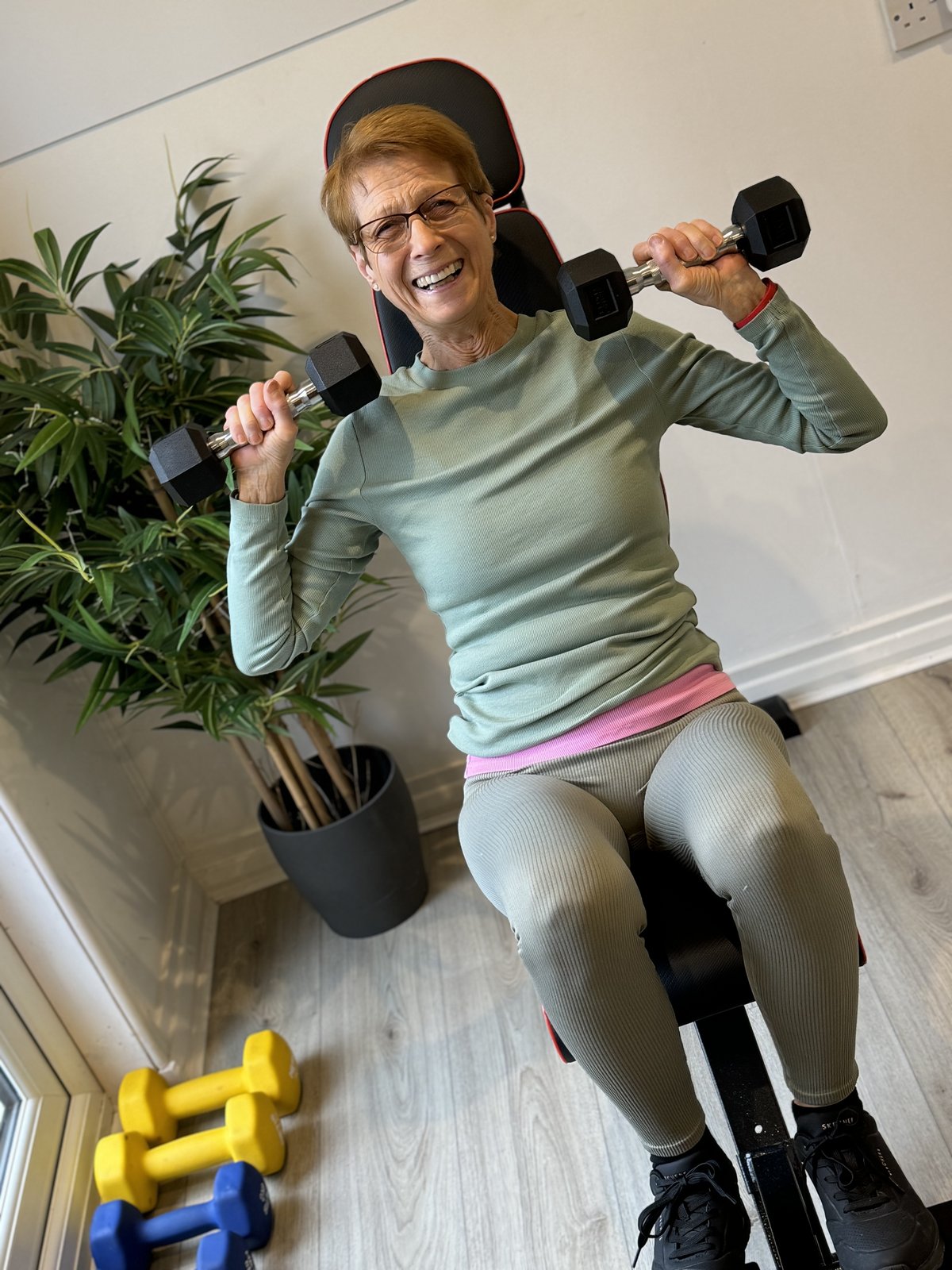
Heather’s sessions combine resistance work with functional strength training, using a mix of dumbbells and machine-based exercises.
The takeaway
Heather’s log is a great, simple illustration of something we talk about a lot at Exercise Prescription, that exercise is medicine. It’s not about chasing a single good number, it’s about building a consistent habit that keeps blood glucose in a safer, more stable range session after session.
If you’re managing diabetes and want to understand how exercise could work for you, get in touch and we’ll build a plan around your numbers.